

Join 1,000s of professionals who are building real-world skills for better forecasts with Microsoft Excel.
Issue #61 - Customer Lifetime Value Part 1:
Your Best Customers Are Invisible
This Week’s Tutorial
Most companies have no idea which customers are actually making them money.
That's not an exaggeration. I've worked with enough organizations as an employee and as a consultant to know that the default approach to "understanding customers" is to count them:
How many did we acquire this month?
How many orders did we get?
What's our retention rate?
Just to be crystal clear. These are fine metrics and useful (e.g., for dashboards). But they're not the same as knowing which customers drive your business.
That's what Customer Lifetime Value (CLV) tells you.
Despite its power, CLV is almost universally misunderstood, miscalculated, or ignored entirely. In this series, you're going to fix that by learning CLV from the ground up, using data and Python in Excel.
BTW - While I'll be using Python in Excel for this tutorial series, 99+% of the code is the same whether you use Excel, Jupyter Notebook, or VS Code.
But first, let's get crystal clear on what CLV actually is.
And why most explanations miss the point.
What CLV Actually Measures
CLV is the total net revenue a business can expect from a single customer over the entire duration of their relationship.
Not the customer's first order. Not the customer's average order. The total across every purchase they're expected to ever make, for as long as they remain a customer.
The word expected is a critical part of that definition. Because CLV isn't just a historical calculation. It's a prediction. A useful CLV analysis asks this:
Based on what I know about this customer's behavior, how much are they worth to me going forward?
That distinction matters more than most organizations realize.
The 3 Decisions CLV Should Be Driving
CLV is often treated as an interesting number that sits in a dashboard somewhere. That's a waste. Here's what CLV should actually be powering.
First up is customer acquisition. How much should be spent to acquire a new customer? The only answer that makes sense is to spend less than the customer is worth over their lifetime. Without CLV, you're guessing at your acquisition budget. With it, you have a concrete ceiling.
Next is retention investment. Not all customers who stop buying from you (i.e., churn) are equal in terms of their lost revenue. A customer worth $50 over their lifetime and a customer worth $5,000 deserve very different retention efforts (e.g., offering a discount to keep them as a customer). CLV tells you where to spend.
Third is the customer mix strategy. Which customer segments are you good at serving, and which ones are unprofitable to acquire in the first place? CLV by segment directly answers this question.
I would offer that CLV is one of the most misunderstood metrics in business because it's not just a reporting number. Like all predictive analytics, it's a data-driven decision engine.
Why Averages Are Lying to You
Here's a common problem I see when organizations calculate CLV (when they calculate it at all). They average everything:
Average purchase frequency.
Average customer lifespan.
Average order value.
They multiply these together, often in a Microsoft Excel workbook, and arrive at a single "CLV" value. Leaders love the simplicity of a single number derived from simple calculations. They love making decisions with it.
Unfortunately, that single number is almost meaningless. Why?
Because your customer base isn't a single type of customer. It's a distribution.
You have customers who buy once and disappear. You have customers who buy every month for three years. You have customers who started strong and faded. You have customers who started slow and then accelerated.
Averaging all of that together produces a number that doesn't accurately describe any of them.
BTW - This isn't a hypothetical problem. It's the reason companies over-invest in acquiring cheap, low-value customers and under-invest in retaining high-value ones. Trust me. I've seen this behavior more than once. The averages hide the signal.
You will learn a better way to calculate and use CLV to drive decisions in this tutorial series.
What You Will Learn
Part 2: Build the simple CLV formula. Then we'll look at exactly why it breaks down.
Part 3: Cohort analysis. The foundation that makes everything else work.
Part 4: RFM segmentation. A practical, actionable proxy for CLV you can use immediately.
Part 5: Predictive CLV with machine learning. Turn your RFM features into a forward-looking model.
Part 6: The CAC-to-LTV ratio. How to use CLV to drive acquisition decisions.
Part 7: CLV KPIs. Turning your analysis into something stakeholders will actually use.
Each tutorial builds on the last. By the end, you'll have a complete, working CLV framework for data-driven decisions.
Oh, and you'll also look like a data wizard.
This Week’s Book
If you want to have more impact with data at work, you can't go wrong by learning DIY data science techniques that drive revenue. This book is a great introduction:
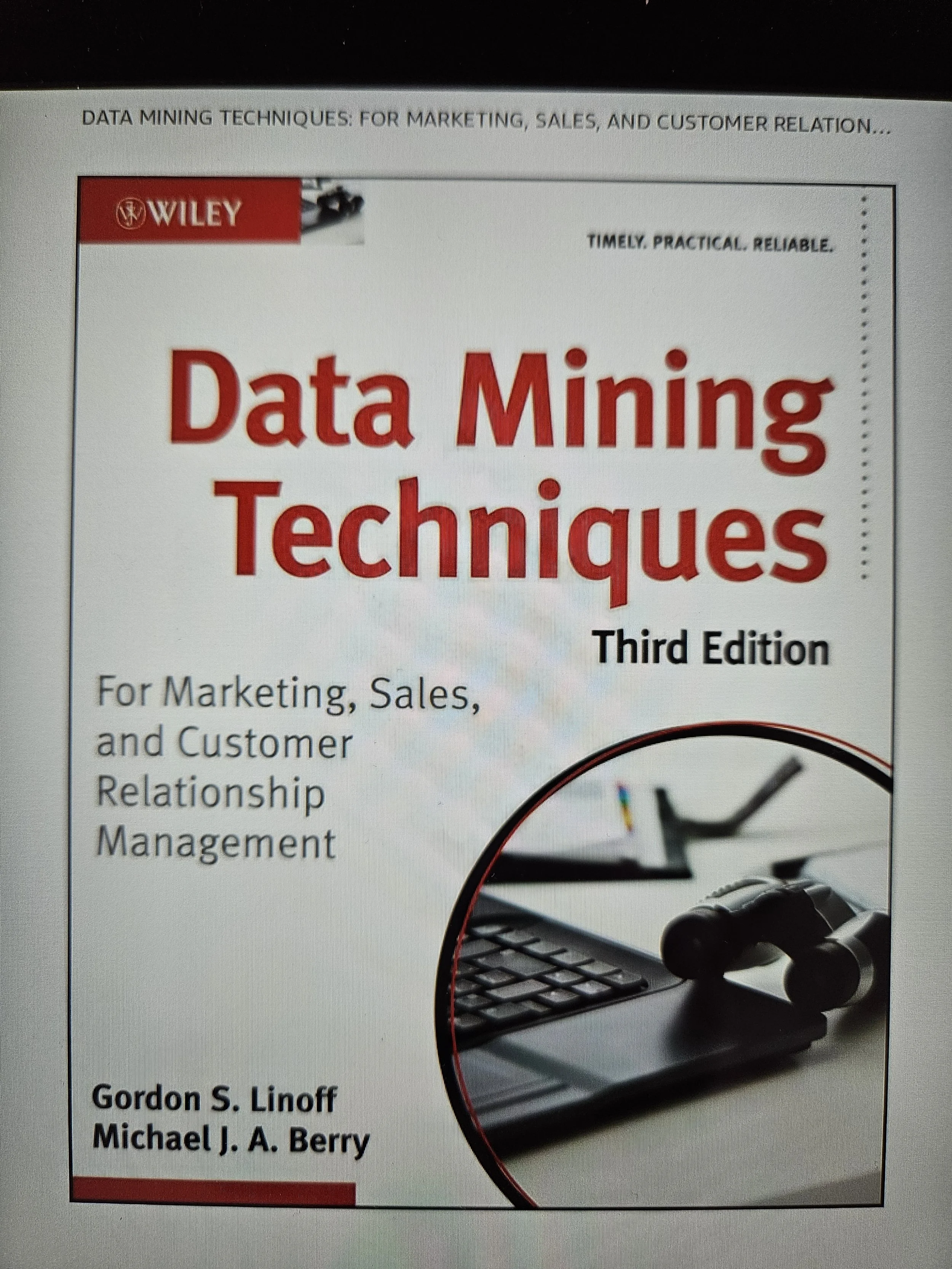
Just in case you're unfamiliar, the term "data mining" was what data science was called back in the old days (e.g., the 1990s). 🤣
That's it for this week.
My next newsletter will continue this new tutorial series by building the simple CLV formula.
Stay healthy and happy data sleuthing!

Dave Langer
Whenever you're ready, here are 3 ways I can help you:
1 - The future of Microsoft Excel is unleashing the power of do-it-yourself (DIY) analytics using Python in Excel. Do you want to be part of the future? My Python in Excel Accelerator online course will teach you what you need to know, and the Virtual Dave AI tutor is included!
2 - Are you new to data analysis? My Visual Analysis with Python online course will teach you the fundamentals you need - fast. No complex math required, and the Virtual Dave AI Tutor is included!
3 - Cluster Analysis with Python: Most of the world's data is unlabeled and can't be used for predictive models. This is where my self-paced online course teaches you how to extract insights from your unlabeled data. The Virtual Dave AI Tutor is included!